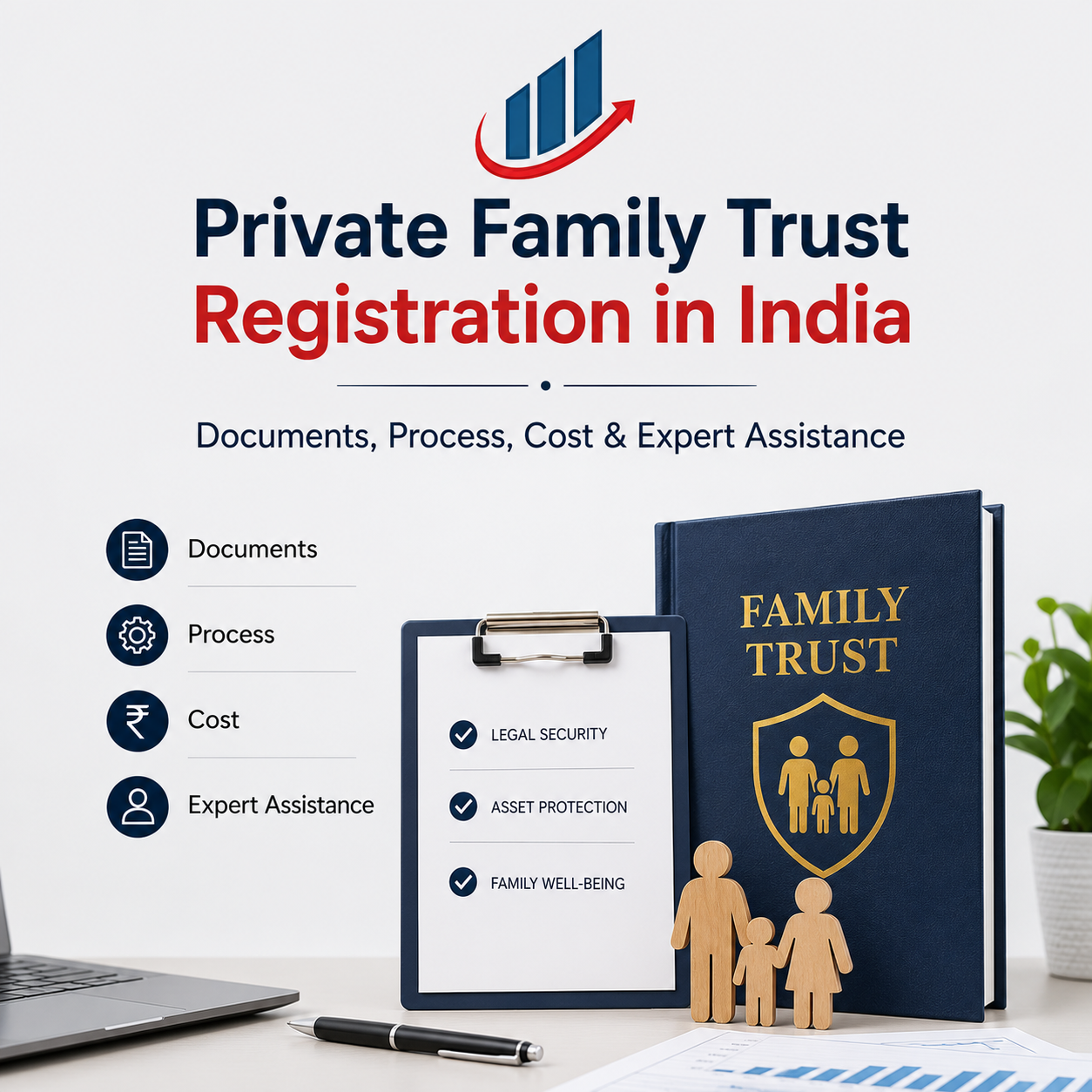
Planning to protect your family's wealth for future generations? A Family Trust is one of the most effective legal structures for preserving assets, ensuring smooth succession, and reducing the risk of family disputes. Whether you own a family business, multiple properties, investments, or other valuable assets, registering a Private Family Trust in India can provide long-term financial security and peace of mind.
At GrowthNEXT Consultants, we help business owners, HNIs, professionals, entrepreneurs, and families establish legally compliant Private Family Trusts with end-to-end advisory, documentation, taxation, and compliance support.
In this guide, you'll learn everything about Family Trust Registration in India, including the registration process, required documents, cost, benefits, taxation, and why expert guidance matters.
What Is a Family Trust?
A Family Trust is a legal arrangement where a person (the Settlor) transfers assets to a Trust, which is managed by Trustees for the benefit of designated Beneficiaries, usually family members.
A Private Family Trust helps:
- Protect family wealth
- Preserve assets for future generations
- Simplify succession planning
- Avoid future ownership disputes
- Manage family businesses efficiently
- Enable structured wealth transfer
- Improve long-term financial planning
Unlike a Will, a Family Trust can provide continuity in asset management and greater control over how wealth is distributed
Book a Free Family Trust Consultation
Why Register a Family Trust in India?
Many families believe trusts are only for ultra-high-net-worth individuals. In reality, Private Family Trusts are suitable for business owners, professionals, real estate investors, startup founders, NRIs, and anyone with significant family assets.
Common reasons include:
- Protect family-owned business assets
- Preserve inherited wealth
- Manage multiple properties
- Succession planning for family businesses
- Protect minor children
- Avoid lengthy inheritance disputes
- Structured wealth transfer
- Confidential management of family assets
If your goal is to safeguard your family's financial future, a properly structured trust can be a valuable solution.
Who Should Create a Private Family Trust?
A Family Trust may be suitable for:
- Business owners
- MSME promoters
- Startup founders
- Doctors and professionals
- Chartered Accountants
- NRIs with Indian assets
- Families owning multiple properties
- Individuals planning intergenerational wealth transfer
- High Net Worth Individuals (HNIs)
The larger and more diverse your asset base, the greater the benefits of professional trust planning.
Documents Required for Family Trust Registration in India
Although documentation varies based on the trust structure and assets involved, the following documents are commonly required:
Identity Proof
- PAN Card
- Aadhaar Card
- Passport (for NRIs)
Address Proof
- Utility Bill
- Passport
- Driving Licence
- Bank Statement
Passport Size Photographs
Of Settlor and Trustees.
Trust Deed
The most important legal document defining:
- Objectives of the Trust
- Trustee powers
- Beneficiaries
- Asset details
- Management rules
- Distribution provisions
Address Proof of Registered Office
Where applicable.
Asset Details
If assets are transferred into the trust:
- Property documents
- Investment statements
- Share certificates
- Business ownership records
Family Trust Registration Process in India
Professional planning makes the registration process smoother and legally compliant.
Step 1 – Understand Your Objectives
Define why you're creating the trust:
- Wealth protection
- Succession planning
- Asset management
- Family business continuity
Step 2 – Decide the Trust Structure
Determine:
- Settlor
- Trustees
- Beneficiaries
- Trust objectives
Step 3 – Draft the Trust Deed
A professionally drafted Trust Deed should clearly define:
- Rights
- Responsibilities
- Distribution rules
- Trustee powers
- Asset management framework
Step 4 – Execute the Trust Deed
The deed is executed on the applicable stamp paper and signed by all required parties.
Step 5 – Register the Trust (Where Applicable)
Depending on the nature of the trust and applicable state regulations, registration requirements may vary. Professional guidance helps ensure compliance with the relevant legal procedures.
Step 6 – Transfer Assets
Assets intended for the trust are transferred according to applicable legal requirements.
Step 7 – Ongoing Compliance
A Family Trust may require:
- Record maintenance
- Tax filings
- Trustee resolutions
- Regulatory compliance
Professional support ensures smooth ongoing administration.
Family Trust Registration Cost in India
One of the most common questions is:
"How much does Family Trust Registration cost in India?"
The cost depends on several factors:
- Drafting complexity
- Number of trustees
- Number of beneficiaries
- Type of assets
- State-wise stamp duty
- Registration requirements
- Tax planning needs
Every family's circumstances are unique, so there is no one-size-fits-all fee. It's advisable to seek a personalized consultation for an accurate estimate.
Register Your Family Trust Today
Benefits of a Private Family Trust
A professionally structured Family Trust offers several long-term advantages:
Asset Protection
Protect valuable family assets from unnecessary risks.
Wealth Preservation
Ensure assets remain within the family across generations.
Business Succession Planning
Facilitate a smoother transition of family-owned businesses.
Reduced Family Disputes
Clearly defined ownership and distribution rules help minimize conflicts.
Better Estate Planning
Supports structured transfer of wealth according to the settlor's intentions.
Confidentiality
Trust arrangements generally provide greater privacy than public succession processes.
Flexible Asset Management
Trustees manage assets according to the terms of the Trust Deed.
Family Trust Taxation in India
Taxation depends on factors such as:
- Type of trust
- Nature of income
- Beneficiaries
- Trust structure
- Applicable provisions under Indian tax laws
Since tax implications vary significantly, professional tax planning is essential before creating a trust. GrowthNEXT Consultants helps families understand the tax considerations and structure trusts in line with current legal requirements.
Read More Family Trust Taxation
Common Mistakes to Avoid
Many families make avoidable errors, including:
- Copying generic Trust Deeds
- Selecting unsuitable trustees
- Poor succession planning
- Ignoring tax implications
- Not defining beneficiary rights clearly
- Failing to update trust records
- Transferring assets without legal advice
These mistakes can create legal, tax, and operational challenges later.
Why Choose GrowthNEXT Consultants?
At GrowthNEXT Consultants, we provide comprehensive advisory for Private Family Trust Registration in India.
Our services include:
- Family Trust Advisory
- Trust Structure Planning
- Trust Deed Drafting
- Family Trust Registration Support
- Tax Planning Guidance
- Estate Planning
- Business Succession Planning
- Asset Protection Strategies
- Ongoing Trust Compliance Support
Our experienced professionals work closely with business owners, promoter families, HNIs, and professionals to develop practical, compliant, and goal-oriented trust structures.
Frequently Asked Questions
Can I create a Family Trust in India?
Yes. Subject to applicable laws and proper documentation, individuals can establish a Family Trust to hold and manage assets for designated beneficiaries.
How long does Family Trust Registration take?
The timeline depends on document readiness, trust complexity, and applicable registration requirements.
Is Family Trust Registration mandatory?
Requirements vary based on the type of trust and jurisdiction. Professional advice is recommended to determine the appropriate legal process.
Can a Family Trust own property?
Yes. Subject to applicable laws, a trust can hold assets such as immovable property, investments, shares, and business interests.
Is a Family Trust better than a Will?
A Will and a Family Trust serve different purposes. A Trust can provide ongoing asset management and structured succession during and after the settlor's lifetime, while a Will typically takes effect after death. The right choice depends on your family's objectives.
Secure Your Family's Legacy with Expert Guidance
A Private Family Trust is more than a legal document it's a long-term strategy to protect your family's wealth, preserve assets, and plan for future generations. With proper structuring, clear documentation, and professional guidance, a Family Trust can support effective succession planning while helping families manage assets with confidence.
If you're considering Family Trust Registration service in India, GrowthNEXT Consultants can guide you through every stage from planning and documentation to trust structuring, taxation, and ongoing compliance.
Book a confidential consultation with GrowthNEXT Consultants today to discuss your family's goals and explore the most suitable trust structure. Our team is committed to delivering practical, compliant, and personalized solutions that help protect your legacy for generations to come.
Call Our Family Trust Specialists